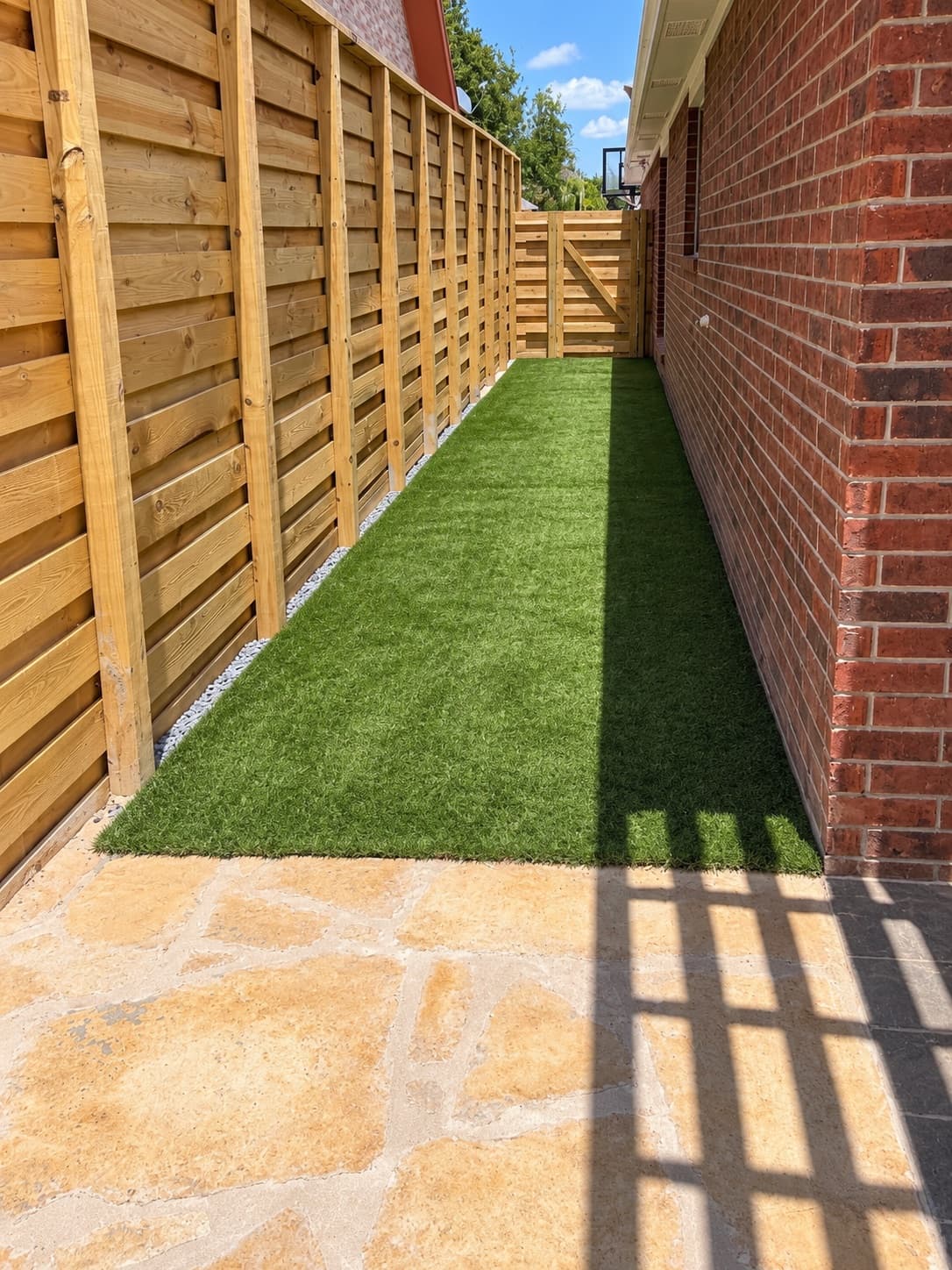
Artificial turf makes sense in the Rio Grande Valley for the same reasons real grass struggles here: long summers, water restrictions, and clay soils that turn to mud when it finally rains. Done right, turf stays green year-round with no mowing and almost no water. Done wrong, it ripples, drains poorly and gets uncomfortably hot.
Here is what separates a turf install that lasts from one that gets replaced.
The base is the product
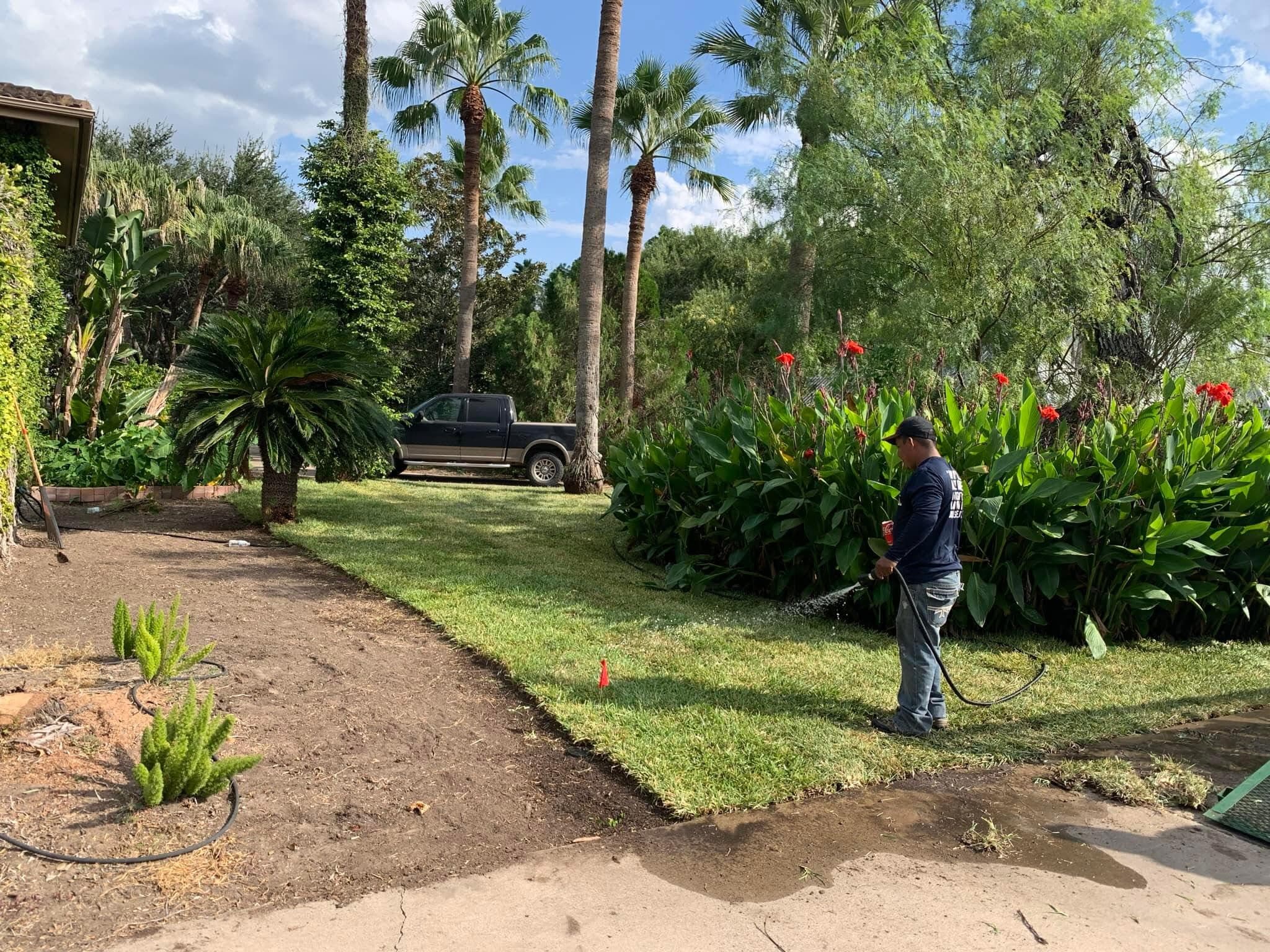
Turf is only as flat and as durable as what is under it. A proper install removes the existing grass and roots, excavates to depth, lays and compacts a crushed-rock base, and sets edging so the perimeter cannot creep. Skipping compaction is the most common shortcut, and it shows up as ripples and low spots within a season.
Drainage comes first
Valley storms drop a lot of water fast. Turf itself drains, but the base has to move that water somewhere. On flat lots we grade the base to a low point and tie it into a drain or a swale so the yard is usable the morning after a storm instead of a week later.
Heat, pets and pools
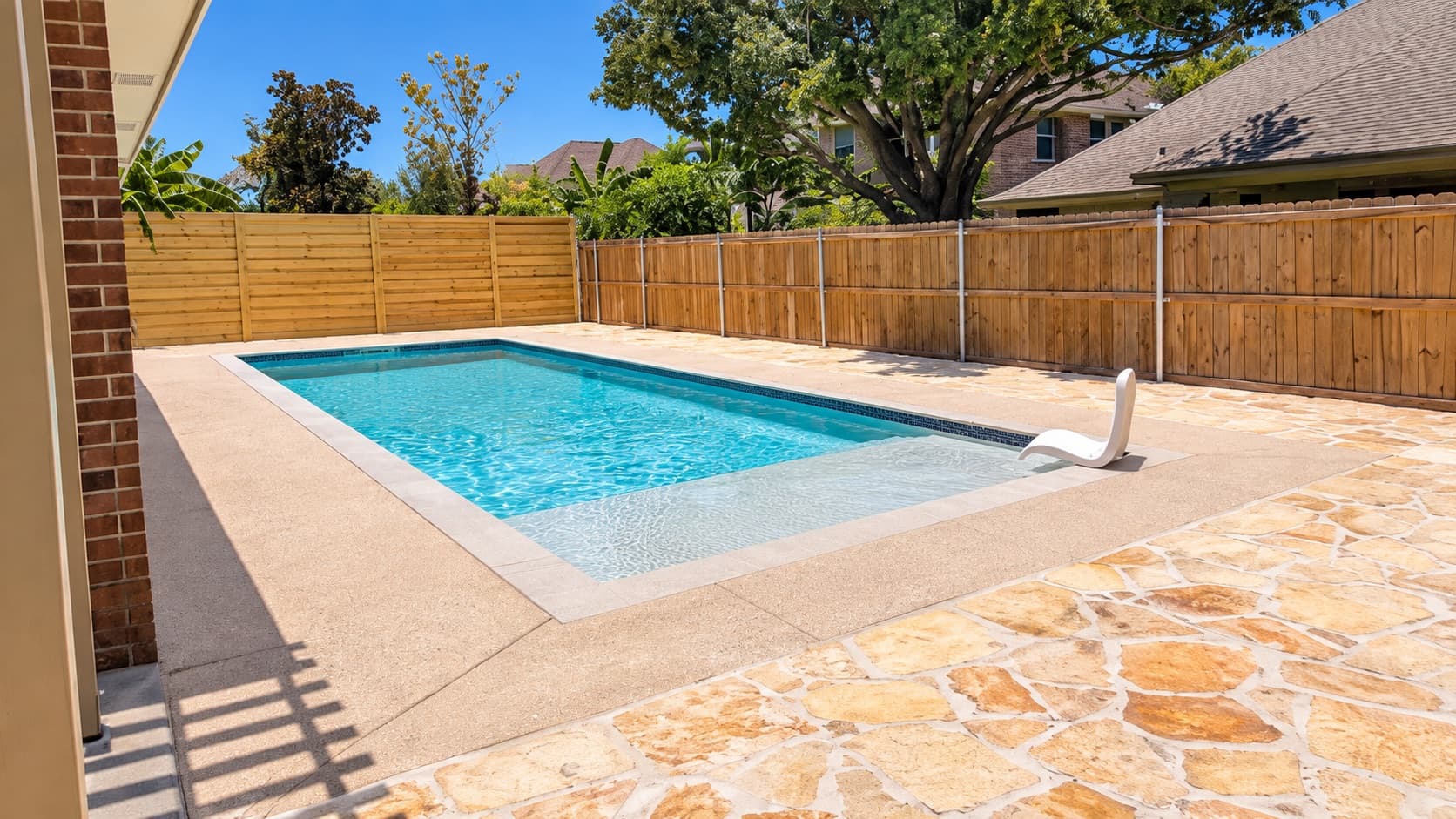
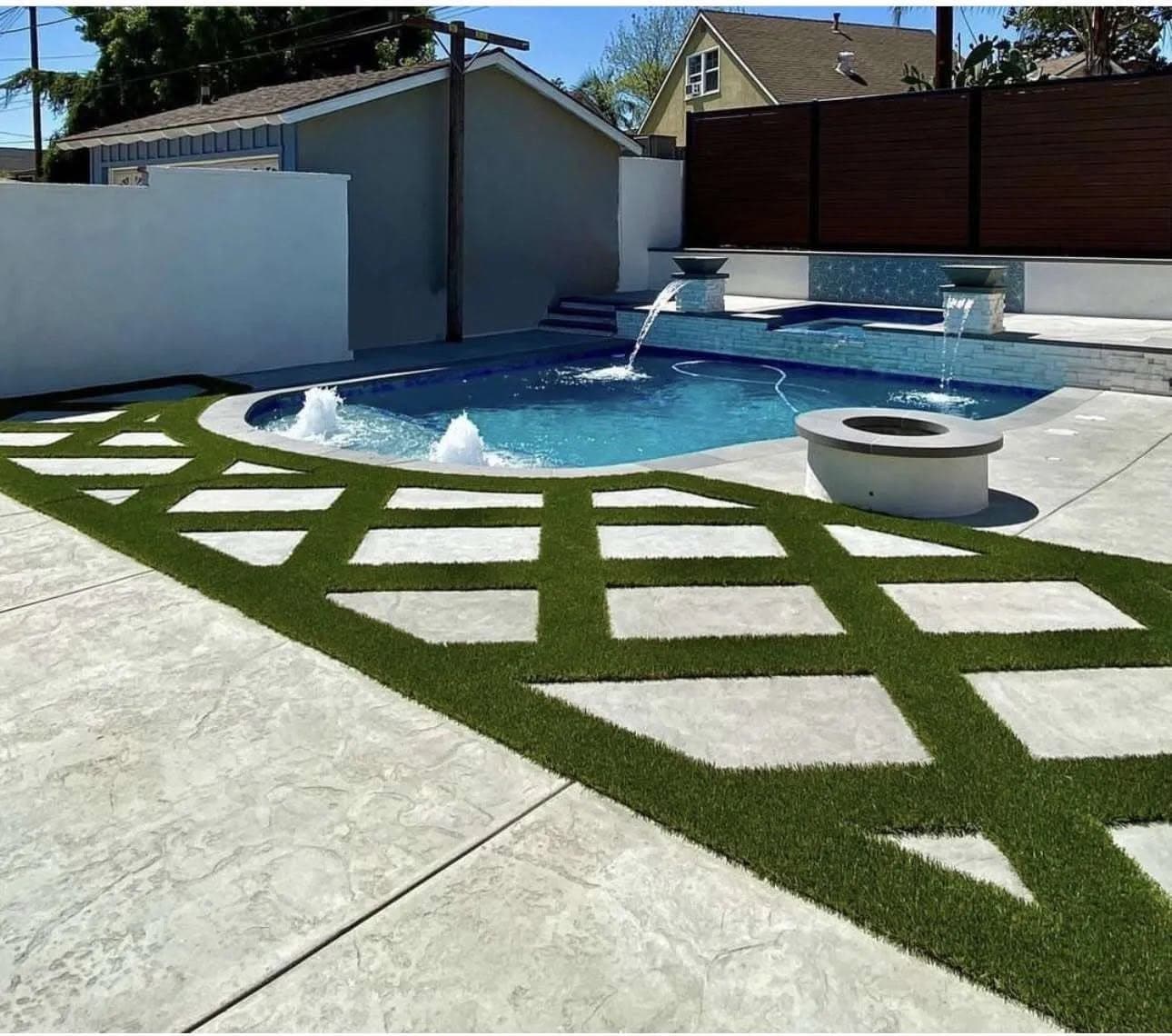
Turf gets warmer than natural grass in direct sun. Lighter-colored blades, some shade, and placement away from the hottest afternoon exposure all help. Around pools, turf pairs well with pavers or concrete so the hot-foot zones are hardscape and the soft zones are turf.
For pets, ask for a turf with a permeable backing and an antimicrobial infill. It drains faster and rinses clean.
- Expect a 15 to 20 year life on a quality product installed on a compacted base.
- Ask what infill is being used and why.
- Ask to see the base before the turf goes down.
Related capability
Artificial Turf